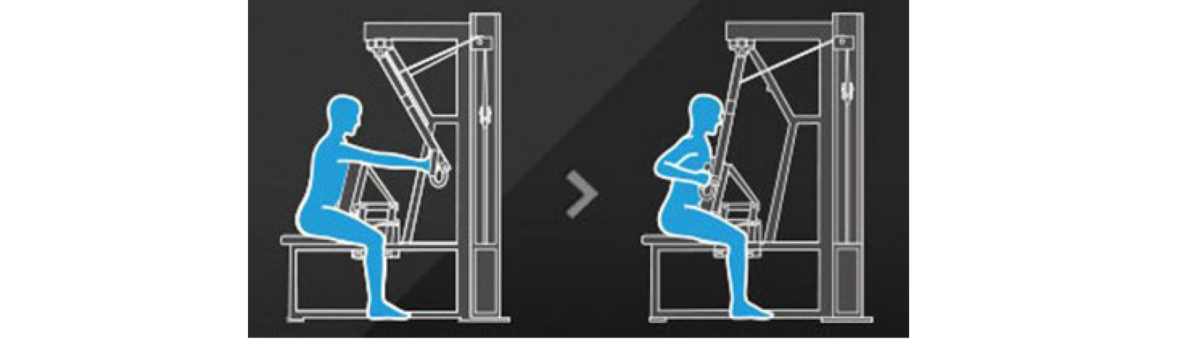
Machine of the Month - C7 Row Machine
The C7, or row, isolates and strengthens the trapezius, latissimus dorsi, rhomboid and bicep muscles.
The C7 is one of our most commonly used machines and is also an exercise that in most conventional gyms is frequently performed incorrectly. The C7 exercise focuses on the retraction movement of your shoulder blades, doubled with the flexion movement of your elbows.
The C7 is also what we call a corrector machine, which means that it is designed to correct certain imbalances caused through poor posture (e.g. sitting at a desk on a computer for multiple hours per day). To put it simply, the row is a great machine to help you sit up straighter and to improve your upper body posture.
Important Technique Points
-
Be sure to keep your elbows close to your body and move them back as far as possible
-
Ensure that you don’t allow the weight to pull your shoulders forward when coming back to the start position
-
Keep your shoulders low and your back straight throughout the exercise
-
Remember to keep your chest on the pad and keep your wrists in line with your forearms
If you would like to add the C7 to your training program, be sure to talk to an Exercise Scientist.


